Why Every Retailer Should Be Thinking Non-Endemic
A Practical Guide to Non-Endemic Advertising: How to Monetize and Grow
Introduction
Marketers are under more pressure than ever. Acquisition costs are rising, and traditional channels are underperforming. That’s why more brands are turning to non-endemic advertising — a smarter, more cost-efficient way to reach high-intent audiences and generate incremental revenue.
It’s a simple concept with big potential: allowing brands to advertise in environments where their products aren’t sold, but where the audience remains highly relevant. For advertisers, it means reaching real buyers. For merchants, it means unlocking new revenue from existing traffic, at the exact moment when the consumer’s attention is highest.
This is where commerce media enters the picture. Once defined by retail media networks, commerce media has evolved to include any channel that connects advertising to the transaction experience. Non-endemic placements are a natural extension of that shift, expanding the commerce-media opportunity beyond a retailer’s own catalog to engage audiences at every point of purchase.
Together, these approaches are transforming how brands drive performance and how publishers and retailers monetize their digital real estate.
What is Non-Endemic Advertising?
Endemic ads appear where they naturally belong, such as a retailer promoting its own inventory.
Non-endemic ads, on the other hand, show up in places where they add value — not clutter.
For example:
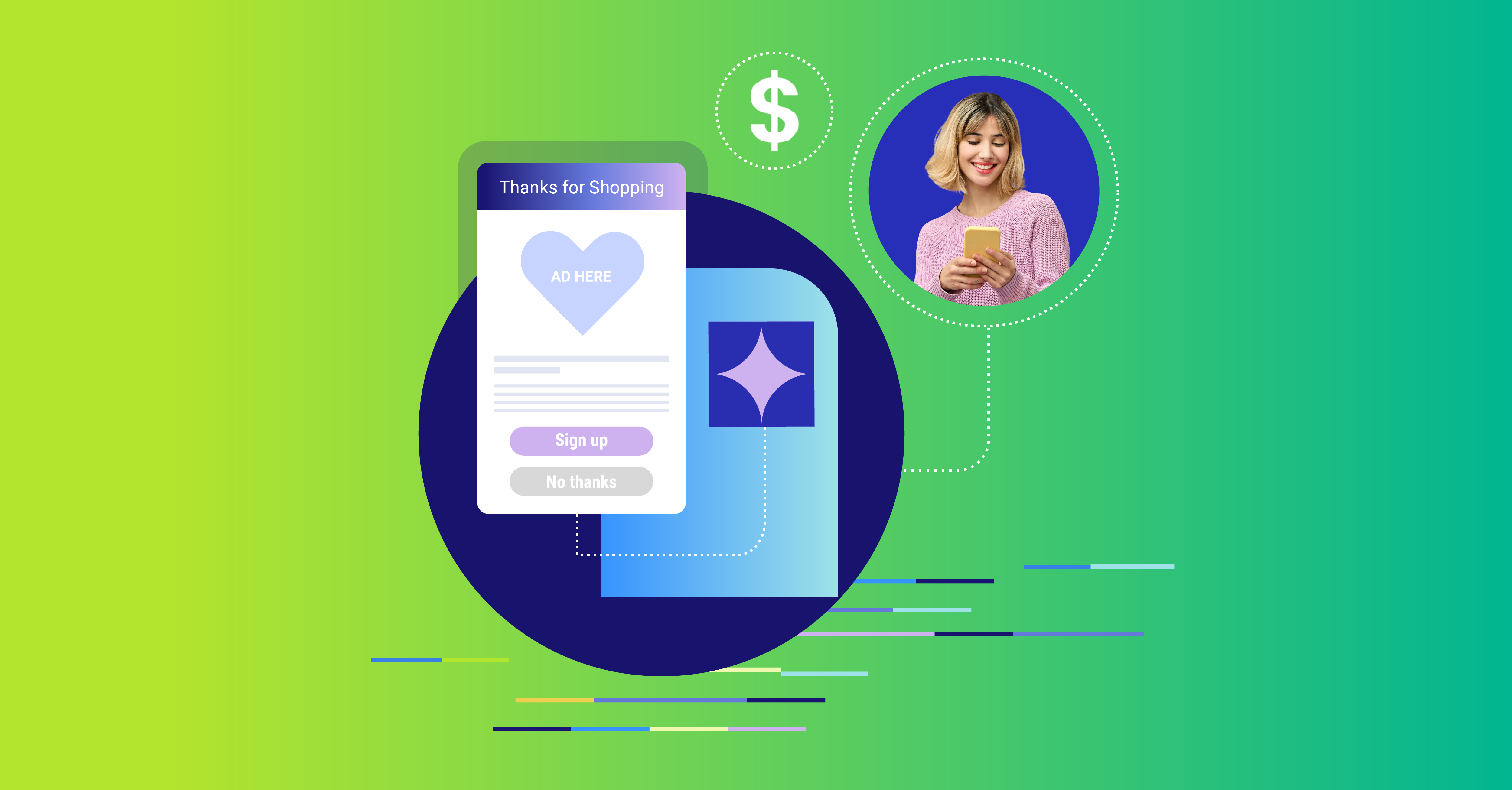
- A shopper checks out with new sneakers and gets a free trial for a healthy meal kit.
- A traveler books a hotel and sees an offer for a travel rewards card.
- A concertgoer buys tickets and receives a discount for a rental car or nearby restaurant.
These aren’t random promotions. They’re contextually relevant moments that make sense for the shopper and create incremental revenue for the merchant.
Why It Works
Non-endemic ads work because they’re placed where attention is high and friction is low. The post-purchase or confirmation page is a perfect example, a moment when customers are engaged, relaxed, and open to discovery.
“In a world where every touchpoint matters, non-endemic advertising gives brands a way to reach audiences outside their usual echo chambers, in moments that actually matter,” said Jennifer Olsen, Fluent advisory board member and CMO.
When done right, these ads feel additive, not intrusive. They complement the customer experience instead of interrupting it.
Where Non-Endemic Ads Show Up
Non-endemic ads can surface anywhere a consumer is attentive and receptive — not just when they buy, but when they engage, track, or share. The most effective programs think holistically across the journey, mapping each touchpoint to unique KPIs and designing creative content accordingly.
You’ll find these placements across nearly every part of the customer journey, including:
- Order confirmation and thank-you pages
- Shipment tracking and order-status updates
- Email receipts and loyalty dashboards
- App experiences, subscription confirmations, or survey completions
According to Brian Hogan, EVP of Commerce Media at Fluent, the confirmation page remains one of the most effective placements:
“This is a high-intent user — someone who’s just completed a purchase and still has their credit card in hand. It’s a natural environment to deliver relevant offers.”
These placements allow retailers and advertisers to connect with audiences when engagement is strongest and the experience still feels cohesive.
Why Advertisers Are Paying Attention
Non-endemic, post-purchase placements live inside the transaction flow (confirmation pages, thank-you screens, and post-checkout emails). They give advertisers far greater visibility into performance. You can track:
- Clicks to conversions: From upsells and cross-sells to repeat purchases.
- CPA, ROAS, and LTV: With less attribution leakage and clearer links to incremental impact.
- Incremental lift: Proven through control and holdout comparisons.
The results speak for themselves. In many deployments, CTRs reach double-digit levels — far above typical benchmarks for display, social, or even search. Barnes & Noble College saw a +74% lift in CTR and a +113% lift in effective conversion rate through their post-purchase program with Fluent.
Across Fluent’s network, post-purchase ads average an 11% CTR, outperforming every major paid-media channel. For context, search ads typically see between 3–6%, social platforms like Facebook and Instagram average under 1%, and display or programmatic ads often fall below 0.3%.
Because this performance happens at the bottom of the funnel, these clicks aren’t just vanity metrics — they drive meaningful conversions and stronger long-term value. That means more predictable CPA, better ROAS, and a clearer path to higher lifetime value (LTV).
Forward-thinking advertisers are making post-purchase media a core part of their paid-media mix.
Why Retailers and Publishers Are Leaning In
For merchants, non-endemic ads create a steady stream of incremental profit without changing anything about how they sell or serve customers.
Here’s what makes it work:
- Monetizes high-traffic pages that would otherwise sit idle.
- Complements existing brand and vendor partnerships.
- Enhances the customer experience with relevant, personalized offers.
Fluent’s research shows that 63% of shoppers who see post-purchase ads say they improve their experience, and 57% discover a new brand or product they love.
The best part? Retailers typically earn between $0.20 and $0.40 per transaction, with minimal lift.
“It’s truly incremental,” Hogan said. “For most partners, it’s found money.”
Where It Fits in the Funnel
Non-endemic advertising lives near the bottom of the funnel. It’s designed to convert, not just create awareness.
For advertisers, it’s a way to drive customer acquisition, app installs, and subscriptions with transparent measurement and closed-loop attribution.
For retailers, it’s a turnkey revenue channel that connects performance marketing and customer experience in one motion.
Check out more resources to get fluent in:
Machine Learning | First-Party Data | Commerce Media